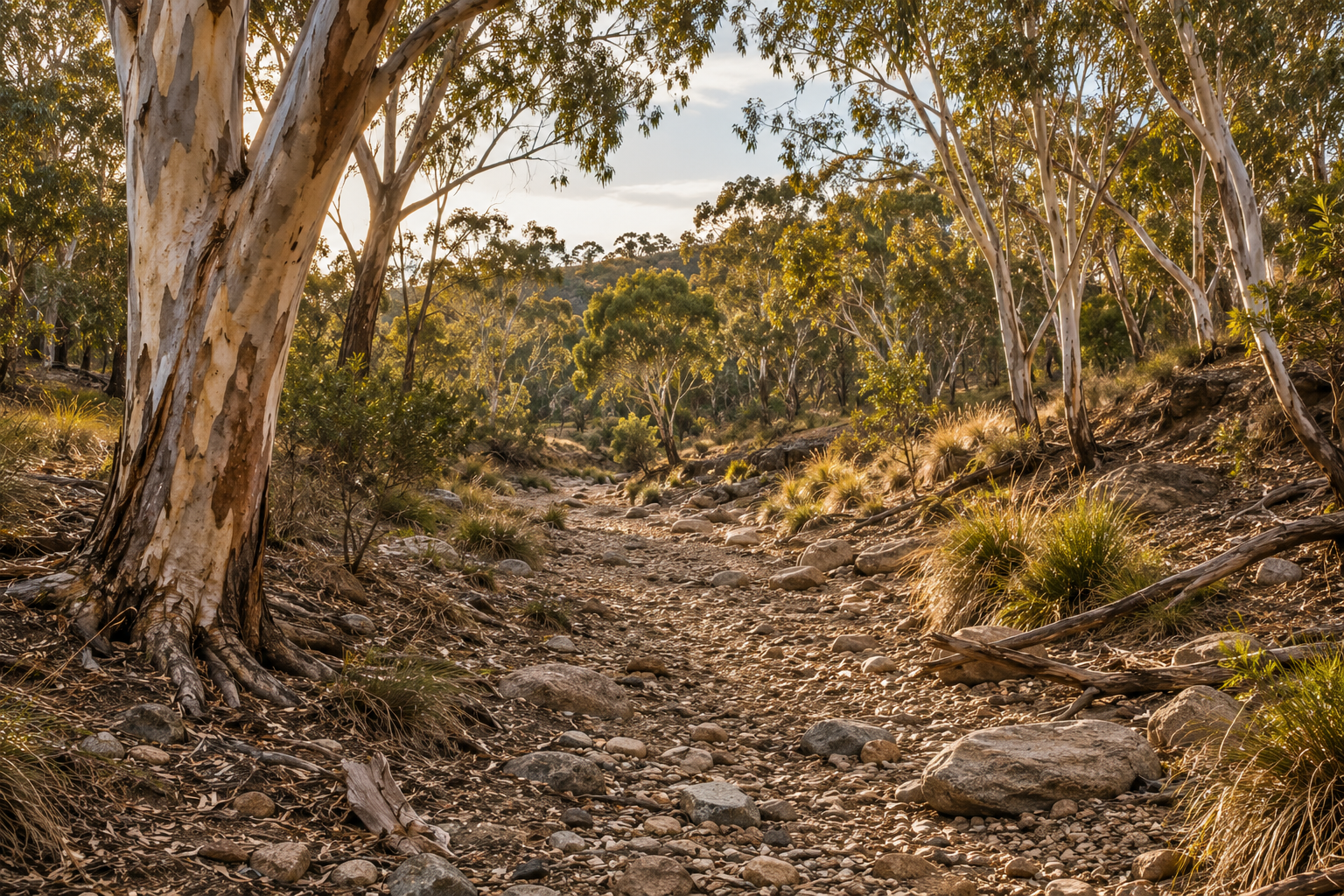
Fifteen Minutes in my backyard on a walk. Did I mention that my backyard is 42 acres! Forty‑Two Acres. A longer wander.

I stepped outside intending only a short break — a fifteen‑minute reset between the small obligations of the day — but the land has a way of stretching time. Out here, on these forty‑two acres, even a brief walk becomes a kind of quiet pilgrimage. The air was cool enough to make the breath visible, and the light had that soft, pearled quality that only appears after a night of gentle rain. The first thing I noticed were the spider webs. They were everywhere — strung between fence posts, draped across low shrubs, suspended like tiny hammocks between the stems of grasses. Each one was jeweled with droplets, trembling slightly as if the whole paddock were breathing.


In the right angle of light, they looked like constellations fallen to earth. I found myself leaning in close, watching the way each droplet held a miniature world inside it. Grief feels like that sometimes: invisible until the light catches it, and then suddenly it’s all you can see.
Further along the track, the fungi announced themselves in quiet clusters. Some were the colour of old parchment, others a deep russet, and a few glowed with that improbable apricot tone that always makes me think of lanterns. They pushed up through the leaf litter with a kind of stubborn optimism. Autumn had laid its palette across the ground — ochres, reds, brittle yellows — and every step stirred the scent of damp earth and eucalyptus.


Then I heard them before I saw them: the galahs. A whole flock, maybe twenty or more, wheeling overhead in a loose, laughing formation. Their calls were bright and chaotic, like a group of friends who can’t quite decide whether they’re arguing or celebrating. They landed in the old red gum near the creek, shuffling along the branches, pink chests puffed out, crests flicking up and down as if gossiping about my slow progress. There’s something disarming about galahs — their silliness, their boldness, the way they seem to take nothing seriously except each other.

Not far behind them came the cockatoo — one of the local sentinels — announcing its displeasure with the full force of its opinion. There is nothing quite like being scolded by a bird that believes it owns the entire sky. Its voice cracked through the quiet like a warning bell, and the galahs responded with a chorus of indignant chatter.


A group of white‑plumed honeyeaters flicked through the shrubs, quick as sparks, while a family group of babblers argued in the distance, their voices rising and falling like a family negotiating breakfast. And then there were the noisy choughs, fanning their wings and tails. Their red eyes standing out, hauntingly. The soundscape of this place is layered: laughter, complaint, gossip, warning. A whole avian neighbourhood with its own politics.

I paused beneath a yellowgum and listened. Really listened. Out here, silence isn’t the absence of sound — it’s the space that holds everything together. The soft tick of water sliding from branch to ground. The rustle of leaves shifting under the weight of a small bird. The distant wingbeat of something large moving through the canopy. Even the quiet has texture.
By the time I looped back toward the house, only fifteen minutes had passed. But the world felt rearranged in that subtle way it does when you’ve paid attention — when you’ve let yourself be claimed by the small, shimmering details of a place that is both wild and familiar.
Sometimes healing isn’t a grand journey. Sometimes it’s just a short walk through your own backyard, noticing what the light reveals.


